Dark Fantasy Books
Dark fantasy is a subgenre of fantasy that sits at the border between wonder and dread. It dwells in the darker, grittier corners of the genre, eschewing traditional heroes in favour of anti‑heroes, outcasts, or even villains.
It draws on myth and magic, but refuses the comfort of more conventional fantasy. Instead, it leans deeper into the shadows, into worlds where power is deadly, morality bends under pressure, and the supernatural is as treacherous as it is fascinating.
What defines dark fantasy isn’t simply the presence of darkness or grimness, but the way those elements shape the story’s heart. Characters must navigate forces older, colder, or more indifferent than themselves; victories are hollow, and survival often demands compromise. The genre thrives on tension between beauty and decay, hope and ruin, the human and the monstrous.
Rather than restoring order, dark fantasy explores what happens when the world is already broken, or when the act of mending it may demand a price no one should have to pay.
what is dark fantasy?
It is a subgenre of fantasy — though some might argue it has become a genre in its own right — that embraces the supernatural while refusing the safety and certainty often found in more traditional fantasy. It is defined not only by its darker tone, but by the way that tone shapes the world, the characters, and the emotional stakes of the narrative. Magic is rarely benevolent, power often carries a deadly cost, and the boundaries between the human and the monstrous blur in ways that challenge both characters and readers.
At its heart, dark fantasy is about tension, the pull between awe and fear, beauty and decay, hope and destruction. The worlds it explores are often hostile, shaped by ancient forces and histories, and dangers that cannot be easily defeated. Morally grey characters must navigate these landscapes with limited knowledge and imperfect choices, and the genre’s emotional weight comes from watching them endure, adapt, or succumb.
Narratively, dark fantasy leans into conflict that cannot be solved through simple heroism. The threats are too vast, too old, or too morally tangled for clean resolutions. Instead of quests that restore order, dark fantasy often follows journeys that reveal how fragile order really is, or how much must be sacrificed to preserve even a fragment of it. Magic is not a tool but a presence: unpredictable, dangerous, and often tied to forces beyond mortal understanding.
Thematically, dark fantasy grapples with corruption, temptation, survival, and the cost of power. It asks what people become when confronted with impossible choices, and what remains of them when the world they inhabit offers no easy path to redemption, or no path at all. It is a genre that dwells in the ruins of old empires, and in the shadows cast by gods, monsters, and the consequences of human ambition.
how dark fantasy differs from horror
Dark fantasy and horror share a border, but they cross it for different reasons. Horror seeks to frighten, to provoke fear or shock through intrusion, violation, or the collapse of safety. Its focus is the experience of terror itself. Dark fantasy, by contrast, uses fear as a lens rather than a destination. It is less concerned with scaring the reader and more interested in exploring worlds where danger is woven into the fabric of existence. It wants to explore the nature of evil bringing the reader along on the journey, rather than to use evil to scare the reader witless.
In horror, characters are often powerless against forces that overwhelm them. The supernatural is an intrusion: something unnatural breaking into the normal world. Dark fantasy reverses this dynamic. The supernatural is not an invader but a constant, a force that shapes the world, its history, and the people who inhabit it. Characters may be outmatched, but they are rarely helpless; they have agency, even if the choices available to them are terrible.
Horror typically resolves through survival or destruction: escape the monster, defeat it, or be consumed by it. Dark fantasy resolves through transformation. Characters are changed by what they face, morally, spiritually, or physically, and the story’s weight comes from the cost of that change. Where horror asks, “Will they survive?” dark fantasy asks, “What will survival turn them into?”
In short, horror aims to terrify. Dark fantasy aims to unsettle.
Characters in dark fantasy
Characters in dark fantasy are shaped by the worlds they inhabit. Unlike the noble heroes of high or epic fantasy, they are rarely paragons of virtue or destined saviours. They are flawed, conflicted, and often compromised long before chapter 1. Their choices are not between good and evil, but between what harms them least, or what preserves a fragment of their humanity in a world that offers little reason to hold on to it.
Moral ambiguity is not a stylistic flourish in dark fantasy. It is the natural consequence of living in a world where power is dangerous, institutions are corrupt or broken, and survival demands difficult decisions. Characters may strive for goodness, but goodness is rarely simple. They may fall short, fail outright, or discover that the cost of doing the right thing is higher than they can stand.
Where epic fantasy often celebrates the rise of the hero, dark fantasy examines the weight of being one, or even of not being one. Characters are shaped by trauma, loss, and the consequences of their actions. They are not protected by destiny. They are not rewarded for being good. They are forced to navigate forces greater than themselves, and the story’s emotional power comes from watching them endure, adapt, or be transformed by what they face.
In dark fantasy, the question is not whether a character will win out, but what the struggle will take from them. The genre cares less about purity and more about truth: the truth of fear, of desire, the truth of what people become when the world refuses to be nice.
Good versus evil
Where genres such as epic or high fantasy draw a clear line between good and evil, dark fantasy smudges it, if not erasing it altogether. Evil is usually unmistakable, whether ancient forces, corrupt magic, or murderous characters, but “good” is rarely pure. It is more likely to be debatable at best. It shifts depending on who is looking, what they’ve endured, and what they’re willing to sacrifice. Characters make choices not because they are righteous, but because they have to. In dark fantasy, morality is not a shining banner but a flicker of light in a world that rarely rewards it, if it’s even there at all.
Dark fantasy also has a tendency to reflect our own world, especially its darker aspects. Victors rewrite history and paint themselves as “good,” as the heroes, just as in real‑world history. Such stories can be more nihilistic, bleak in nature, and not for the faint‑hearted.
magic in dark fantasy
Magic in dark fantasy is never a simple tool or a convenient solution. It is ancient, unpredictable, and often dangerous, shaped by forces that existed long before the characters who attempt to wield it. Unlike the structured spell-craft sometimes found in high fantasy, magic in dark fantasy carries a sense of mystery and threat. It is something characters approach with caution, reverence, or fear, knowing that every use has a price. It may even be a corrosive or destructive force with no upside to its use.
In these worlds, magic is rarely benevolent. It corrupts, consumes, or alters those who touch it. Power may grant strength or insight, but it also exacts a cost, whether physical, moral, or spiritual. Characters who seek magic often do so out of desperation rather than ambition, and even the most well‑intentioned use can lead to unintended harm. The question is not simply what magic can do, but what it will take as or after it does it. While magic in other subgenres of fantasy also carries a price, the one paid in dark fantasy is often far too expensive, and often not worth the return.
Magic also shapes the world itself. It influences landscapes, histories, and the nature of the otherworldly. Curses linger for generations, ancient rituals leave scars on the land, and forgotten gods or entities exert their will in ways mortals can barely comprehend. It’s woven into the setting as a living presence, not a system to be mastered, or to level up in.
In dark fantasy, magic is a reminder that the world is larger, stranger, and more terrible than the characters can appreciate. It is a source of wonder and fear in equal measure, a force that reveals the limits of human control and the cost of reaching beyond them.
subgenres in dark fantasy
Dark fantasy is a broad and shifting subgenre, or genre if you prefer, and readers often disagree on where its borders lie. Some define it by tone, others by the presence of horror-like elements, and yet others by the moral weight carried by the characters. What follows is not a definitive list, but a set of commonly recognised branches that reflect how the genre is most often understood.
Mythic Dark Fantasy
Stories shaped by ancient forces, forgotten gods, and supernatural powers. The tone leans toward the atmospheric and symbolic, where magic and myth carry a sense of inevitability and danger. Darkness arises from the weight of history and the presence of vast ancient powers often long forgotten.
Gothic Dark Fantasy
A blend of fantasy and Gothic tradition, marked by decay, haunted settings, and emotional intensity. These stories explore ruin, obsession, and the eerie. The horror is often psychological, rooted in atmosphere and dread rather than violence.
Moral‑Grey Dark Fantasy
A branch defined not by monsters or magic, but by the characters. Protagonists are flawed, conflicted, or compromised, and the world offers no easy path to virtue. Choices are difficult, victories are costly, and the emotional core of the story lies in what characters sacrifice or become.
Grimdark
Often grouped with dark fantasy, but distinct in style and tone. Grimdark depends more on brutality, cynicism, and the collapse of moral order. The world is harsher, justice is rare, and hope is fragile, if it exists at all. While dark fantasy leans into fear and the supernatural, grimdark leans into human failings and the consequences of power.
Supernatural Dark Fantasy
Stories where the supernatural is central and overt. Demons, undead, curses, or monstrous entities shape the plot, but the story remains fantasy rather than pure horror because characters confront or engage with these forces rather than simply being hunted by them.
Cosmic or Weird Dark Fantasy
Influenced by cosmic horror and weird fiction. These stories explore the incomprehensible: entities or truths that dwarf human understanding, magic that warps reality, and worlds shaped by forces that cannot be reasoned with. The tone is unsettling rather than frightening.
Dark Epic Fantasy
Epic in scope but with a darker edge. These stories involve large‑scale conflicts, ancient evils, or world‑shaping events, but the victories are costly and the moral lines blurred. The stakes are vast, yet the emotional core remains grounded in sacrifice and consequence.
Dark Sword and Sorcery
Fast‑paced, character‑driven stories rooted in danger, corruption, and morally ambiguous protagonists. Magic is unpredictable or sinister, and the tone often draws from the traditions of pulp fantasy and weird fiction. Many early works that shaped dark fantasy grew from this branch.
My dark fantasy worlds
I write the kind of dark fantasy books that blends myth, the magical, and flawed characters struggling against ancient forces.
My worlds are shaped by primordial powers, treacherous magic, and the burden of a history that refuses to stay buried. The magical is a constant presence, woven into the world and the lives of those who walk through it.
The characters who inhabit these worlds are conflicted, wounded, and morally grey. They are not chosen heroes, not destined to act as saviours. Instead, they make difficult choices in the face of danger, corruption, and the pull of powers they usually don’t understand. Their journeys are defined not by success but by transformation, and the price of survival is often steep.
Although my stories explore darkness, they are not grimdark in my opinion. They are not built on nihilism or the belief that nothing matters. I write dark worlds where cruelty exists, where danger is real, and where the cost of power is high, but I also believe in the possibility of change, and of hope. There is always a note of that latter in my books, and the struggle to hold on to it matters as much as the battles themselves.
The tone of my work leans toward the mythic and the atmospheric, the kind of dark fantasy books that explore supernatural threat and the metaphysical. I also explore the philosophical, especially the nature of existence and what it means to endure in a world shaped by such dark forces. Magic carries a price, victories are never clean, and the line between the human and the monstrous is quite thin. These are worlds where beauty and ruin coexist, where hope is real but never guaranteed, and where the fight to endure reveals as much about the characters as the dangers they face.
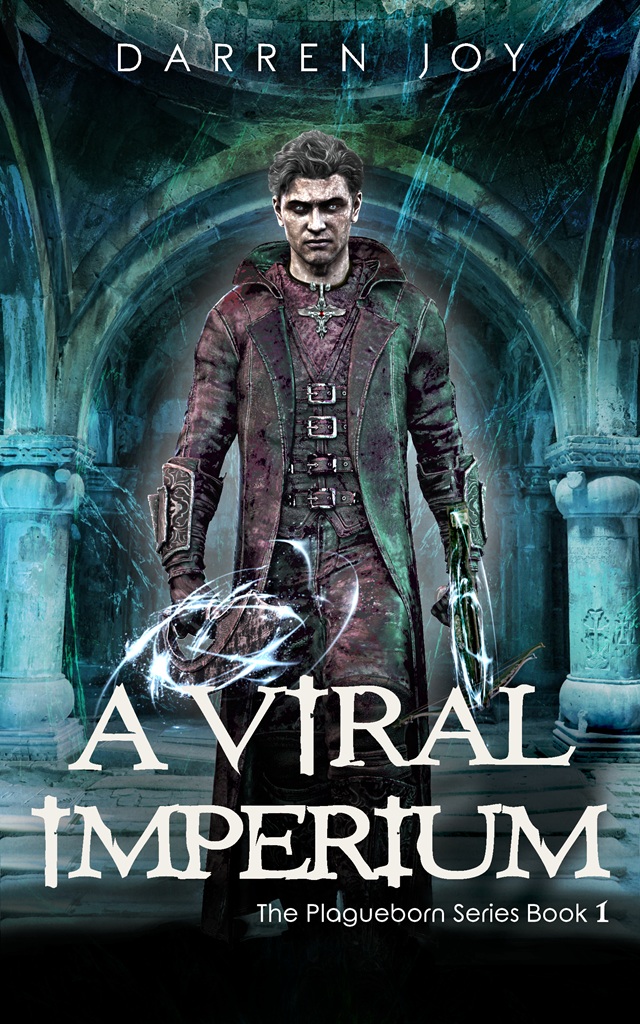
A Viral Imperium
Book 1 of the Plagueborn Series
Undead and hunted, Threadfin Todder carries a plague‑born magic that could save his sister or doom the imperium. As giants march and a shapeshifter stalks his every step, he becomes the only force capable of stopping a terror that threatens to tear the empire apart. But wielding that power may cost him everything he once was.
Links:
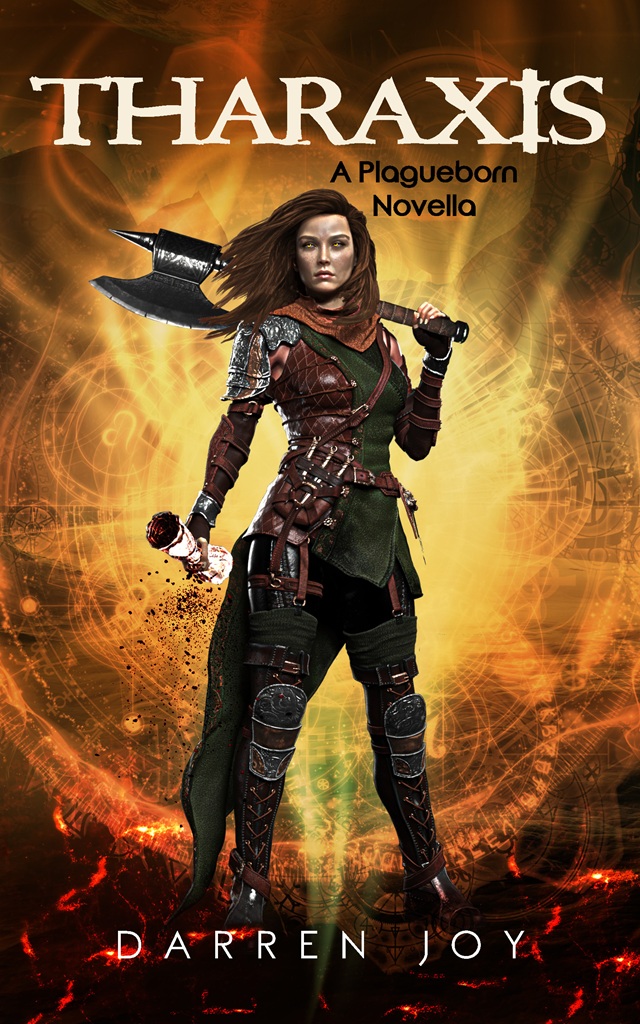
Tharaxis
A dark fantasy novella set in the Plagueborn world
Tharaxis is the city of the dead, a place where souleaters hunt and the living do not belong. Lorn Larthuz, newly deceased, is forced into a desperate quest to reclaim the stolen List of Souls. Yaldo, a strange boy pretending to be alive, becomes her unlikely companion. Together they face the hungers that rule the city and the powers that sleep beneath its stone. A brief, brutal tale set in the deeper shadows of the Plagueborn world.