Lore Fragments
This page collects short pieces of unknown lore from the Plagueborn series, which are either not found, or only briefly alluded to in the books or Shathra Archive. More fragments will be added in due time.
⸻ ⸻ ⸻
Contents
⸻ ⸻ ⸻
Threadfin’s Gift
The Other One
Source: classified imperial records attributed to Aiyana Mayala Todralan.
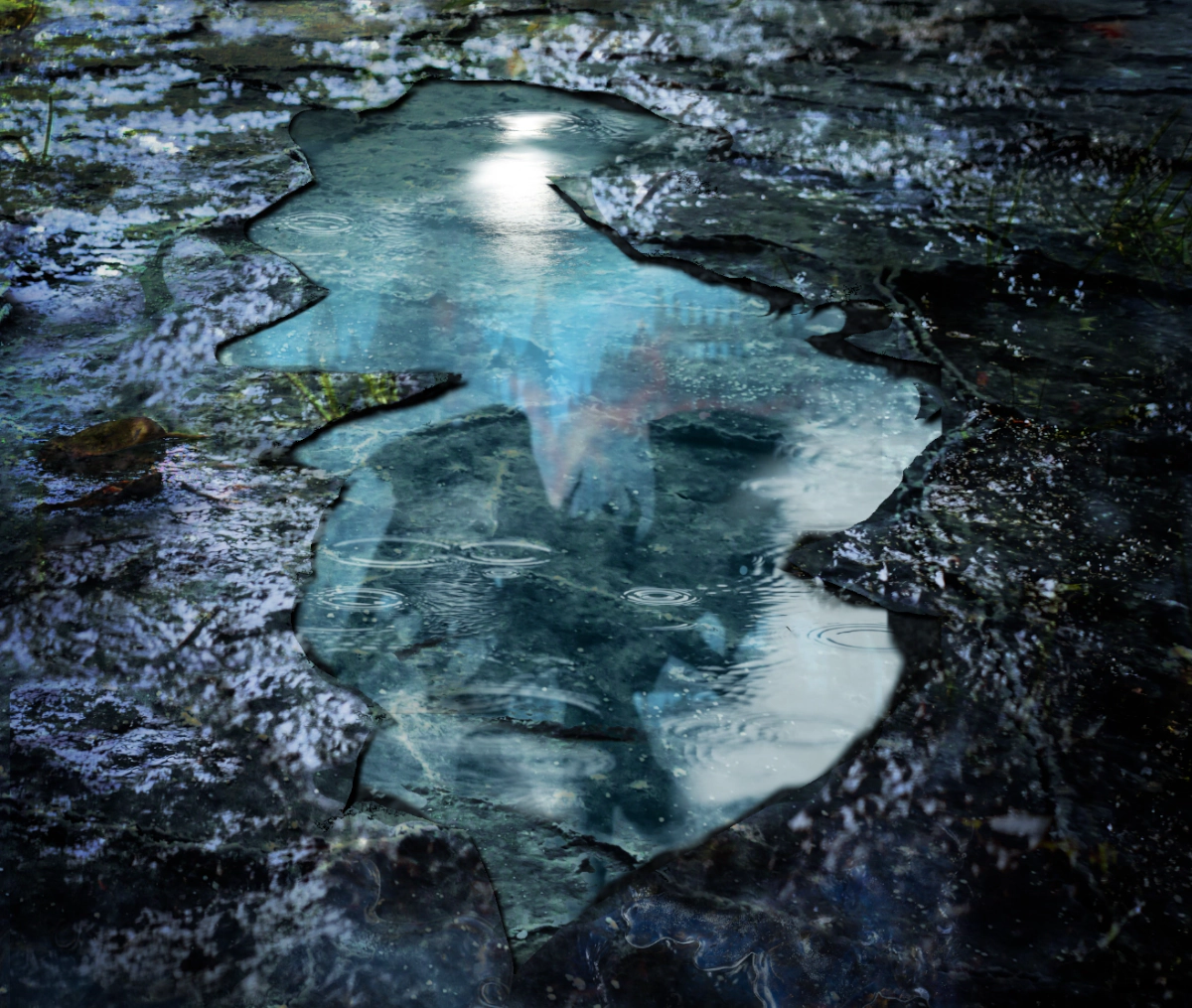
Threadfin Todder repressed many memories. Among those lost memories was the strange relationship he had with his reflection during his childhood. Several secret imperial accounts suggest that the infamous incident at the palace pond was not the beginning of this phenomenon.
As a young undead child, Threadfin wasn’t often allowed where anyone might see him, his nature difficult to explain away. Sometimes, he would discard his dalba, and vanish into the forgotten places beneath the Black Palace, such as old tunnels or abandoned crypts. During one such excursion he discovered a crypt predating the Todralan dynasty, possibly stretching back to the era of the White Palace and the reign of Rasnal Nalrost. At its centre rested a stone well filled with unnaturally dark water.
According to this account, said to have been written by his sister Aiyana during her time as imperatrix, Threadfin peered into the well and saw his reflection smiling, despite the fact his face was still. The image raised a finger to its lips, demanding he not speak. When Threadfin reached up to touch his own in response, he found his mouth sewn shut. Terrified, he fled.
Over subsequent years similar experiences occurred. Reflections occasionally lagged behind his movements, appeared to observe him independently, often possessing expressions that did not belong to him. These manifestations were brief and easily dismissed, allowing Threadfin to convince himself they were his imagination.
One incident proved harder to ignore, and it is likely this which prompted him to confide in his sister. At one point, while hiding in an abandoned section of the palace, rooms imperial historians associated with the infamous Astra Dar, a young Threadfin found himself speaking before an old obsidian mirror slab the height of a child. During this solitary conversation he became convinced that his murky reflection was listening. Not even his sister would learn the content of that conversation.
Things took a nasty turn as the reflection reached out of the polished mirror. It grabbed hold of him as it attempted to drag him inside with it. It is not possible to say what might have occurred if Threadfin had managed to merge with his other self, or if the reflection had in fact, exchanged places with him. Likely, it would have been nothing good.
Having managed to free himself, it ended with the heavy obsidian slab shattering. This section of the palace was later demolished with no explanation. This event would later be echoed in the Tower of Wept when he encountered Gressil, a servant of Lucifer.
After the incident with his sisters at the pond where he nearly killed Sarscha, he developed an aversion to mirrors and polished surfaces, often avoiding them. After all, reflections were dangerous things. Somehow he blocked much of these events from memory, and soon his reflection also vanished. Whether this absence of a reflection in later years was due to something he unconsciously did, or whether it was directly related to the Fetch, remains uncertain. It is, however, well known that his reflection returned once the Fetch was destroyed.
⸻ ⸻ ⸻
The Greencloaks
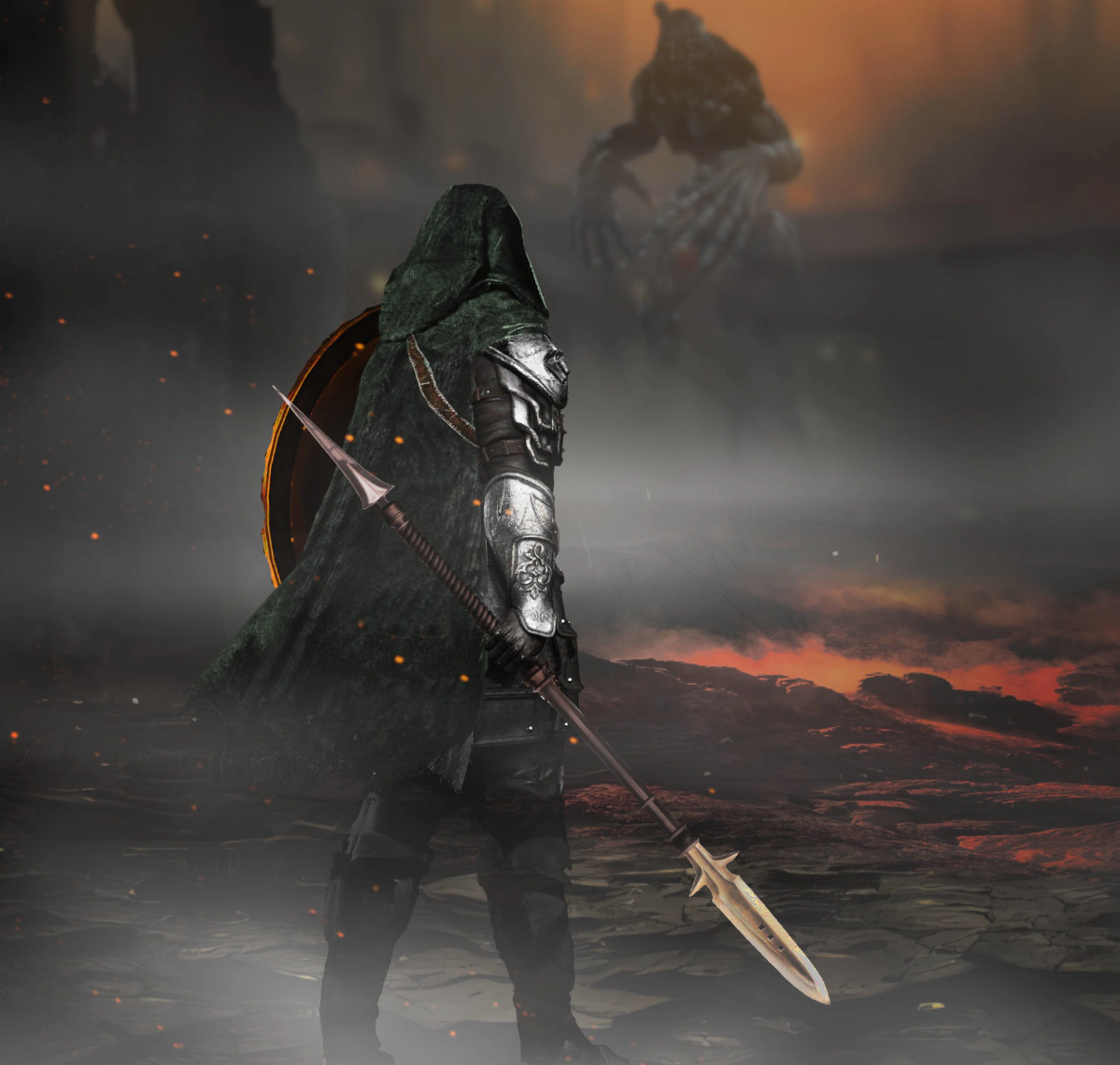
The legionary soldiers of the Imperial Actaeon Guard — ordinary men and women who stand against impossible darkness.
The Greencloaks are the most recognisable soldiers of the Icarthian Imperium. Forming the core of the Actaeon Guard, they’ve marched beneath this colour for centuries, becoming symbols of endurance, discipline, and sacrifice.
Though countless heroes, sorcerers, and viral undead dominate imperial histories, it is often forgotten that the Imperium endured only because ordinary men and women stood their ground when they had every reason to run.
Origins of the Green Cloak
Imperial historians traditionally claim the cloak colour honours Etruria, an Angelborn said to have walked centuries earlier, and who is revered throughout the Imperium for her suffering and martyrdom. Considered the soldier’s patron, many pray to her before entering battle, with several statues and grottos devoted to her within the capital of Icarthya.
According to popular belief, Etruria frequently wore a cloak of green during her time in human form as she battled great evils which had beset humankind. In time, the Actaeon Guard at some point embraced the tradition, until green became synonymous with military service itself. However, the real truth is far stranger.
An older and less widely accepted account tells a different story.
During the earliest years of the Imperium, Etruria, who was in fact a full angel, and not simply Angelborn, is said to have accompanied a legion trapped beyond the River Noy during a disastrous campaign in northern Adalalcas against a force of Nephilim led by an unnamed fallen angel. Surrounded and expecting annihilation, the soldiers prepared for a final stand. Witnesses claimed that Etruria climbed a hill overlooking the battlefield and planted her green cloak upon a dead tree.
Throughout the night the cloak reportedly remained visible despite darkness, rain, and smoke. The isolated soldiers rallied around it, breaking through encirclement at dawn and surviving against impossible odds.
Though they won that battle, the surivors drinking and singing into the night, the next morning they discovered the body of a naked woman, her wings shorn from her shoulders, nailed to that same tree.
Whether the account is true or just legend remains uncertain, but the colour green from that day forward was a common sight. From that day onward, legionaries began tying strips of green cloth to their shields and spears. Within a a few centuries with the advent of Matrod Ral and the imperium, the tradition had spread throughout the army as a cloak of green.
The Bluecloak War
Despite the appearance of unity, the Greencloaks once fought a bitter civil war against the soldiers now known as the Bluecloaks of Byrsa. Official histories describe the conflict as a rebellion, as Bysra, once a city-state prior the formation of the imperium, sought independence. Recent scholarship suggests the situation may have been considerably more complicated.
At the heart of the conflict lay identity.
The Greencloaks viewed themselves as guardians of a united Icarthian imperium. The people of Byrsa increasingly viewed themselves as Byrsan first, Imperial second, and why bother with second? When rebellion erupted, citizens and former legionaries alike adopted blue cloaks to distinguish themselves from their Icarthian counterparts.
The resulting conflict lasted little more than a year but proved remarkably destructive. Entire legions found themselves fighting former comrades. Veterans who had served side by side, met each other in battle.
Several sources claim the bloodshed became so severe that later imperial leaders actively suppressed records relating to the war. In some surviving military archives, entire campaigns are missing.
One curious account records that peace negotiations only gained traction after veterans on both sides began refusing orders to continue the conflict. One account details the appearance of Etruria in the midst of the battle, between green cloak and blue, halting the conflict.
Whether true or not, the eventual cessation of hostilities granted Byrsa greater autonomy while allowing its legionaries to retain their distinctive blue cloaks. The compromise remains one of the few successful resolutions to a major imperial civil war.
Etruria was rumoured to have returned to the imperium in later centuries, but few historians ever agree on such things.
But one fact remained constant throughout imperial history.
The Greencloaks also held the line.
⸻ ⸻ ⸻
Drayl
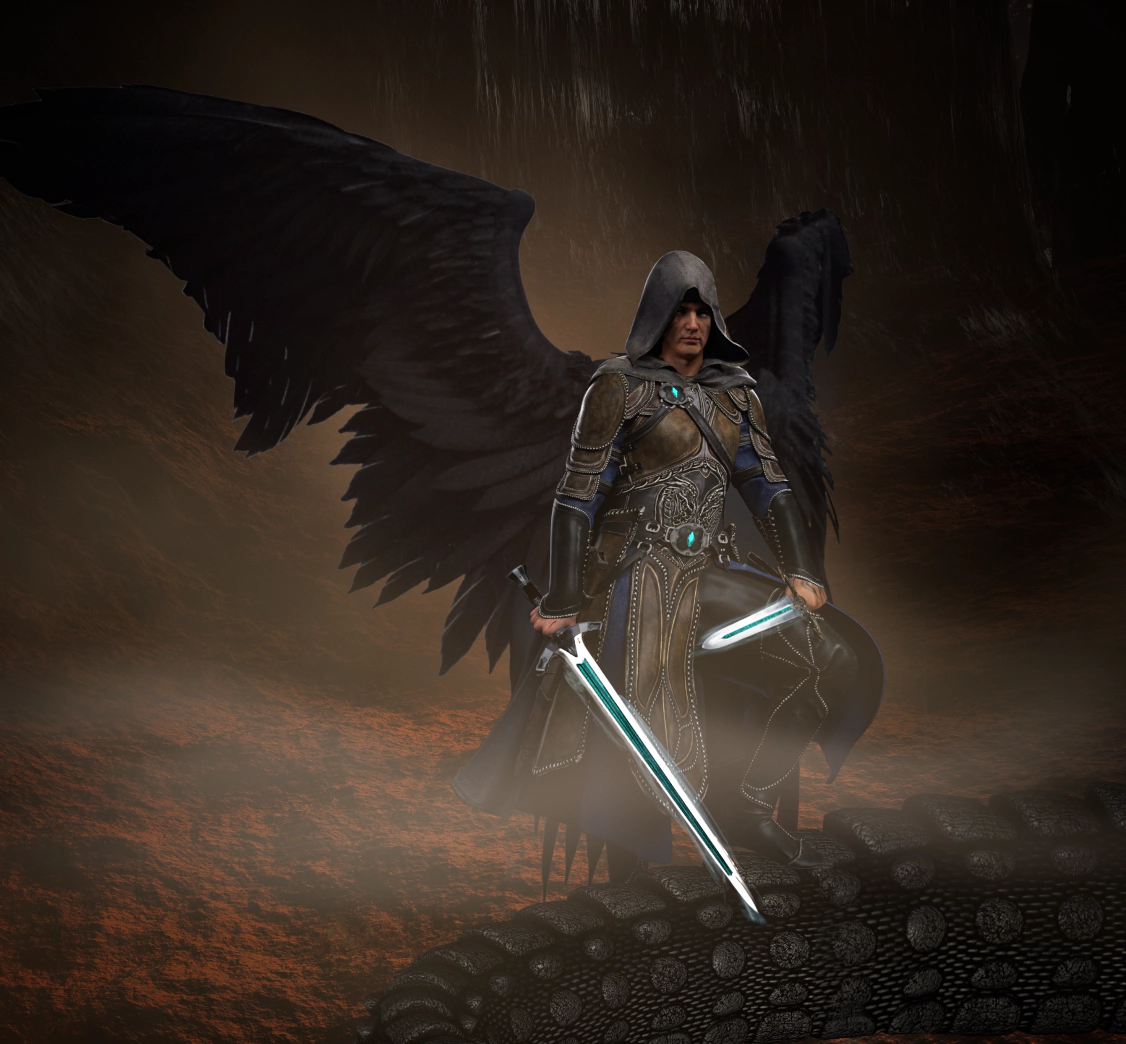
Long before he walked among mortals as Canaan Pen Luthus, Drayl was an angel. Even when young, he clashed repeatedly with Adal and the Seraphim Council, viewing their rule as arrogant, stagnant, and increasingly blind to the threat posed by Tartaros. His defiance eventually led him into the company of dissidents, rebels, and those who believed the Council was leading angelic kind towards extinction. Some saw humankind as pests and the root of all their ills.
The turning point came with the execution of his brother, Roloc, for consorting with the Darkness, as some dissillusioned angels had begun to do. Forced to witness the destruction of Roloc’s angelic soul within the execution stone, Drayl became convinced that angelic justice was the same as cruelty. Already angry and lost, he descended further into rebellion, gathering followers and aligning himself with Andromeda and any others who sought to overthrow the Council. During this period, even Rue Redwings, daughter of Adal and one of Drayl’s closest companions, failed to turn him from the path he had chosen.
The Execution Stone
Among the most feared relics of the celestial realms was the Execution Stone, a vast construct of crystalline Darklight used to carry out sentences reserved for the gravest crimes. Unlike ordinary Darklight, which could imprison an angelic soul, the Execution Stone was designed to unmake it. Those condemned were pressed against its surface, where their souls were drawn into the crystal lattice and torn apart, their essence scattered back into the Spectrum.
The Stone was used sparingly throughout angelic history, most often against traitors who had knowingly allied themselves with Tartaros. Drayl’s brother, Roloc, perished upon the Stone, an event that helped drive Drayl towards rebellion.
Drayl’s Fall
As the rebellion escalated into open war, Drayl surrendered himself completely to the influence of Tartaros. What had begun as political dissent became true corruption. Facing execution after the rebellion’s collapse, he openly declared that the Darkness was inevitable and that resistance was futile. When his sentence was carried out, the essence of Tartaros answered his call, transforming him into one of the first truly corrupted Fallen Ones, a chimera, allowing him to escape annihilation. Millennia later, having lived among mortals as Canaan Pen Luthus and played a role in the downfall of Andromeda, Drayl would finally begin the long road towards redemption. Yet among angelic historians, he remains a cautionary figure: proof that the first step into Darkness is rarely hatred, but the belief that all hope has already been lost.
⸻ ⸻ ⸻
Darklight
The Origin of Darklight
Few substances within the Spectrum of Existence are more confounding than Darklight. Often mistaken for obsidian, it bears a superficial resemblance to volcanic glass but possesses properties no natural mineral should exhibit.
Its origin remained a mystery until a collection of notes attributed to Imperatrix Aiyana Todralan were uncovered decades after her death. A lifelong scholar, Aiyana devoted much of her life to studying ancient records connected to Rasnal Nalrost, and whatever she could uncover regarding the earliest war between existence and the Darkness. The White Daemoni was said to contain answers to such secrets, but even the ruler of Icarthya was denied direct access by the Church’s Paladins, the White Inquisition centuries earlier having destroyed all private copies.
Yet, history records that Aiyana did gain access to the book, and she may have uncovered some secrets therein, supporting, or adding to, the writings of Nalrost. According to her research, she believed that Darklight wasn’t created intentionally by any known being.
Instead, it was a byproduct. An accident.
The First Collision
When Volcanus wielded the Crystal Sword against the fabric of existence, he cut reality itself and created the first breach between the Spectrum and the Darkness, or Tartaros.
When imperial scholars learned of these events in the wake of Threadfin Todder’s encounter with Volcanus, most simply focused on the consequences of that act: the exile of the first angel, the birth of the war against the Darkness, and the eventual creation of countless shraeds and other servants of Tartaros such as the Fallen Ones.
Aiyana, it appears, had earlier discovered that another event had occurred simultaneously. For the first time, existence and non-existence had come into direct contact. “Neither force overwhelmed the other initially,” she wrote, “but instead, traces of both were compressed together within the wound. It may be that in those first few moments, existence resisted and the resulting clash crystalised between them, and then shattered.” It is understood that by wound, she was referring to the breach created by Volcanus.
While it is true that Tartaros began to overwhelm the borders of the Spectrum, producing shraeds and other terrible manifestations wherever it touched existence, something else had formed within those initial seconds of contact. The collision of these two opposing forces had produced a third state, neither wholly real nor unreal.
It became known as Darklight.
The First Wound
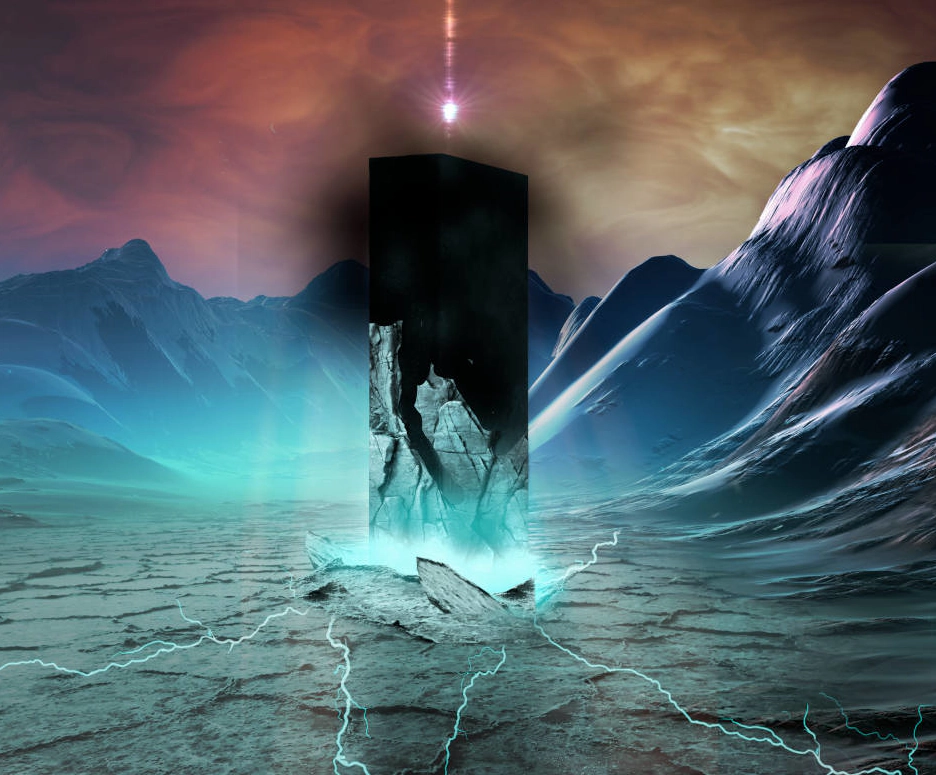
Among the recovered writings of Rasnal Nalrost are fragmented references to a place beyond the known worlds of the Spectrum.
According to Aiyana, descriptions she’d found were inconsistent. Some portrayed it as a barren world beneath an empty sky. Others suggest it was merely the illusion of a world, a border-realm existing between reality and unreality.
Nevertheless, at its centre stood a solitary black pillar.
Nalrost referred to this structure as the First Wound and Aiyana’s own notes raised the question that if it was the first, did this mean there were more? How many had Volcanus made?
The pillar predated humanity by untold ages. According to Aiyana’s reconstruction of the surviving evidence, it formed shortly after the First Breach itself.
Some imperial scholars later studying her writings had decided that the monolith represented the largest concentration of Darklight ever created, a crystallisation of the wound left behind when existence first collided with Tartaros.
What Nalrost witnessed there in truth, remains unknown.
His journals were chaotic and often rambling. As his mind became increasingly unhinged, so too did his writings. References to futures, reflections, vanished worlds, and impossible geometries appear throughout his later texts, but the context was often lost.
Shortly afterwards he began the experiments that eventually produced the First Plague, and with it, the Viral undead, leading to his transformation as the Grim.
Whether the pillar revealed a terrible truth or merely accelerated an obsession already present within him remains a matter of debate.
Darklight in the Mortal Realm
The existence of the First Wound appears to explain how Darklight later entered mortal worlds.
Contrary to popular belief, Darklight is not simply obsidian with magical properties, though even mages like Threadfin Todder are believed to have misunderstood this. Ordinary obsidian forms naturally through volcanic activity and has existed since long before recorded history. Darklight merely resembles volcanic glass, leading many who encountered it, to mistake one for the other.
Modern theories suggest that small fragments gradually broke away from the First Wound over immense periods of time. These fragments drifted through the Spectrum and became embedded within various realities. Others suggest that Nalrost found ways of bringing what fragments he discovered near that pillar into the world.
The Darklight uncovered beneath Mourn is believed to have originated with Nalrost, which he used to help imprison the vampires, by infusing the Darklight with souls. This barrier prevented their escape for centuries.
Though usually found in small deposits, other large amounts were also said to exist in the Grimstyx where the Fetch eventually met its fate.
Properties and Uses
Darklight possesses a unique affinity for reflections, souls, memories, and identities. Unlike ordinary mirrors, it does not simply reflect a subject. It captures.
Throughout imperial history, albeit unknown to most, Darklight was used to imprison reflections, contain fragments of souls, preserve memories, and anchor entities.
The most infamous example is the Fetch, which was created through the use of Darklight and sustained by it for centuries. That same Darklight was eventually used to unmake it, and the reflected souls that composed the creature were finally released.
Accounts from Mourn provide further evidence of Darklight’s unusual properties. For almost a thousand years the viral guardian Skelet watched over thousands of reflections trapped within vast Darklight formations beneath the city. According to his testimony, these reflections slowly faded unless sustained by stories, memories, and interaction.
This has led some scholars to a disturbing conclusion. Darklight may not imprison reflections at all. Instead, it may preserve fragments of existence that would otherwise be lost forever. An interesting distinction, but with little proof.
Not all uses of Darklight were preservative in nature, however. Certain angelic records are said to suggest that rare variants of the substance possessed destructive properties. The angels used a crystalline Darklight Stone as a means of execution, where upon the soul of the condemned angel was pressed against it’s surface, absorbed into the crystal lattice and then torn apart.
It is likely that this type of Darklight was extremely rare, and that the angels stumbled upon it and it’s properties by accident, for there is no account, mortal or angelic, of another like it.
Whatever it was used for, Darklight always remained one of the strangest and least understood substances in existence.