Nephilim
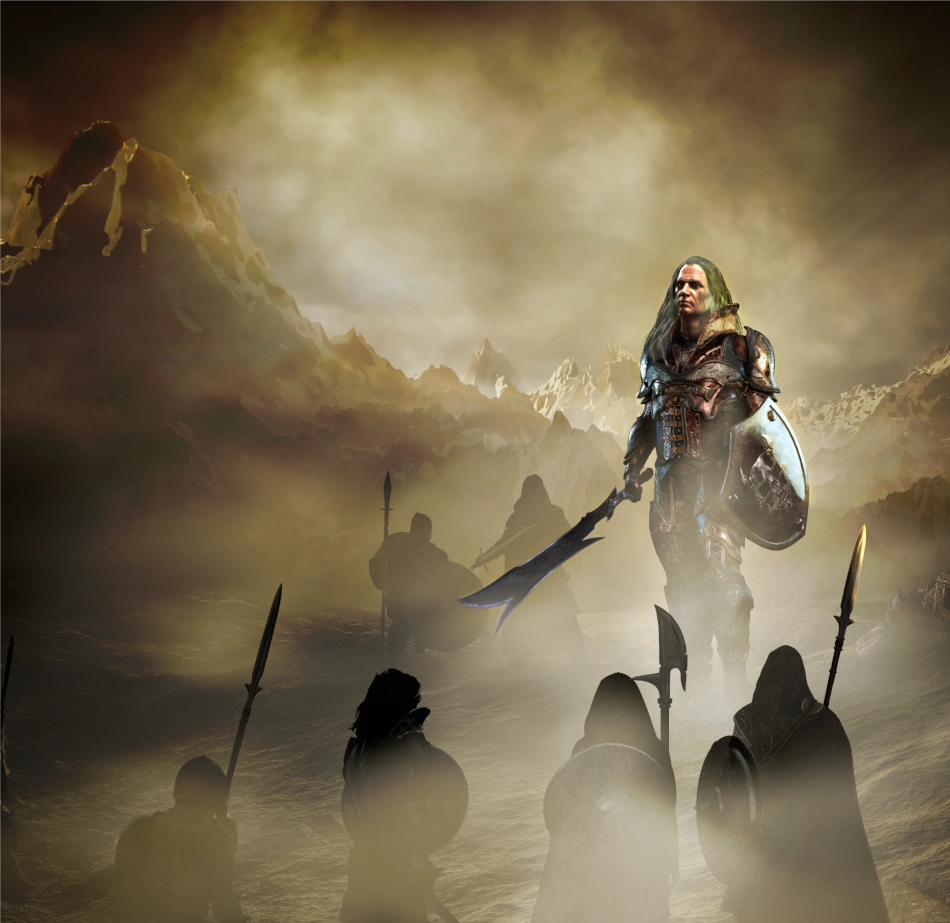
Anak of the Anakim facing down a human host armed with spears
Note on dates: BI refers to Before the Imperium, with the imperium’s founding in the year 1YC referring to Year of the Church, though some scholars will also use YI or Year of the Imperium since both were founded in the same year.
Origins and Early Conflicts
The giants of Raddhon are an ancient warrior race with angelic blood, though much diluted by now. When the first angels took an interest in humans and walked among them around 8000 BI, some formed relationships with mortal men and women. Many of the human women who became pregnant did not survive childbirth. However, the angels who had taken female form and conceived children with human males suffered no such fate.
These angels who had been intimate with humans were deemed fallen by their kin and were eventually exiled after a series of conflicts, with many settling in the paradise world of Elysium, another realm within the Spectrum of Existence. There were notable exceptions, however, including Adal and Linuncia, who later formed unions with humans yet were not condemned for it. Their positions on the Seraphim Council may explain this leniency; corruption and hypocrisy are not unique to mortals.
While most Nephilim were of great stature, others were of more moderate size, though they inherited distinct gifts. The daughters of Adal and Linuncia are two such examples. Not all Nephilim became giants.
(The Spectrum of Existence, or simply the Spectrum, encompasses all that exists — the mortal, angelic, and spiritual planes, and every realm between.)
Other angels regarded humans as pests, if they noticed them at all. A growing faction claimed that mortals were the cause of the expanding Darkness and demanded their eradication. A notable leader among this dissenting group was Saltron who was a lower‑ranked angel with considerable ambition.
The idea of an angel and a human producing offspring enraged such zealots. Worse still, they viewed mortal children with angelic blood as a threat. There is some merit to this fear when one considers the eventual fate of Linuncia’s daughter.
The First Nephilim
Such unions between angels and humans resulted in unusual progeny: the first Nephilim. Some angels who had taken female form formed relationships with human men, and their offspring often became legendary figures or warriors. However, those born to human mothers and angelic fathers proved far more powerful, though few mothers survived. Many of these infants were of monstrous size at birth, and they quickly became leaders among their kind, for size and strength were highly valued among the Nephilim. The direct descendants of these early giants would later be known as the Rephaim.
(The oldest imperial records indicate that almost every mother failed to reach full term and died. A few infants were born of normal stature, but not many. Other unverified reports by unknown authors, noted by later imperial historians, suggest that many women killed either the foetus or themselves before reaching term. Some Nephilim children were murdered when older or cast out from human society, considered dangerous or even evil. As a result, such births ceased after only a few years. Though the surviving children lived extraordinarily long lives, they eventually died out, and over time their descendants, as the Nephilim began to breed with each other, grew smaller. The later trauma and distrust between humans and Nephilim may have been caused, at least in part, by these early events.)
The first Nephilim were said to be beautiful and extremely tall, standing some fifteen or sixteen feet in height, with a few exceptional individuals reaching twenty feet according to unverified ancient accounts. They were powerful and possessed massive feathered wings. Little is known about the more human‑sized Nephilim, those born to angelic parentage but of ordinary stature. Many historical figures who held great power or influence were suspected of being Nephilim, but it is impossible to know for certain.
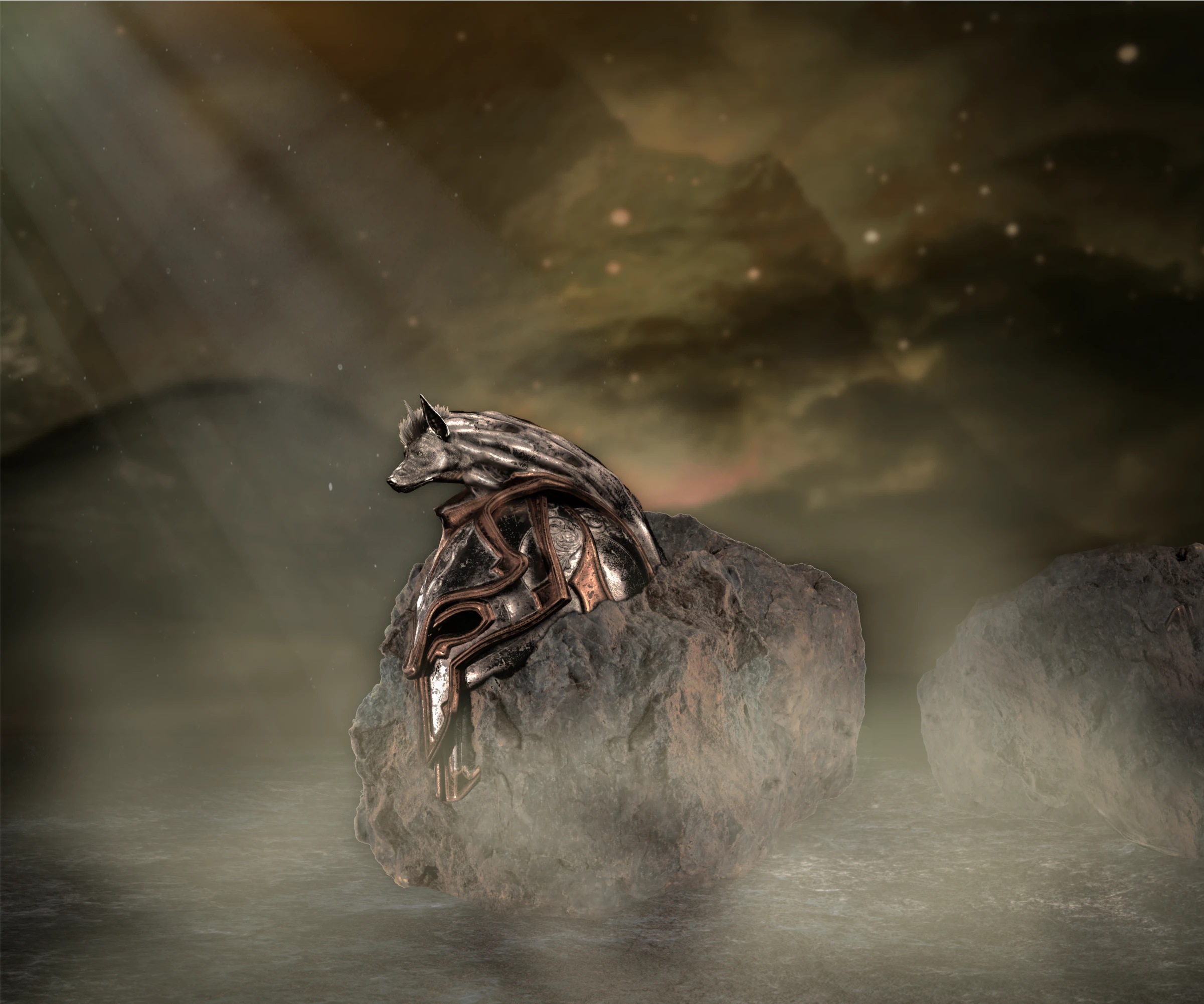
The Early Nephilim
Isolation
Over the centuries, the Nephilim became increasingly isolated from the rest of the world. They eventually withdrew from it altogether and for a time controlled the southern continent of Eladaldor in the west. After several thousand more years, they retreated further into Raddhon in the northeast corner of that continent.
The Fading
As time passed, the physical stature of the Nephilim began to diminish, as generation after generation diluted their angelic blood. No longer did they possess the beautiful wings of their forefathers, and many had none at all. Eventually the Rephaim clan were the only winged Nephilim, and even their wings were a pale remnant of earlier glory. It would not be until the rise of a new king in the year 926 YC that the splendour of the first Nephilim would be seen again.
By the year 5,500 BI, serious divisions within Nephilim society had begun to develop, and they formed into various clans. Inevitably, these clans went to war with one another. The Horim clan were forced into servitude as a result, and over the centuries their size diminished the most.
The Seven Clans
Rephaim
This clan produced a long line of Nephilim kings and became known as the Dead Ones, though the origin of this name is uncertain. It may date from the Nephilim–human wars, but few records from that era survive. They are the largest of the clans and the only ones with wings, although these are a shadow of their angelic ancestors.
Anakim
Rivals to the Rephaim both in height and in politics. They have somewhat longer necks and are known for their tendency to challenge the Rephaim for power.
Avim
Double‑jointed and long‑limbed, not to mention quick‑tempered, they are perhaps the strangest in appearance among the Nephilim. Theories regarding their unusual development have circulated for centuries. One favoured hypothesis among scholars, though unsupported by evidence, is that this clan spent centuries living in remote mountain regions where they developed stronger limbs and were forced to leap across crevices and gorges. While unprovable, it remains the most widely accepted explanation.
Horites
Often acting as priests and healers among the clans, they were said to have served as mediators during internal disputes and to have played a role in ending the human–Nephilim wars. These giants are also believed to guard the Shathra Stone, though they are secretive, and it is said that not even the Nephilim king knows much about them.
Zuzim
A mysterious clan, rarely seen, with some imperial historians debating whether they exist at all. However, anecdotal evidence suggests that members of this clan serve as assassins and spies. They are often closer to human size and can therefore blend more easily among mortals. It has been suggested that they descend from a more human‑sized ancestor, as mentioned earlier, or possibly from Nephilim–human unions. It is impossible to know for certain.
Emim
This clan most often serves as warg handlers or sappers. Roughly eight feet tall, they are extremely aggressive, likely due to the nature of their charges. They typically wear light armour except on the arms and legs, where bites from their wargs are most likely. Some Emim have been observed missing limbs or bearing severe facial injuries. It is unlikely that many form meaningful bonds with the beasts, though rumours persist of rare exceptions.
Horim
The smallest of the Nephilim, they are treated as servants by the other clans and often not considered a clan at all. They were subjugated during earlier clan wars, and their reduced height may be partly due to being forced to mate with humans in the past, as they were regarded as little better than mortals. This, however, is unverifiable.
The First Wars
Humans grew more numerous quickly, while Nephilim numbers remained static, and the discovery of mages among humans led to larger societies and cities. Kingdoms and then empires formed as humans began to spread across the world, forcing the Nephilim to retreat further until eventually they existed only in the western half of the world. It was not long thereafter that they also began to withdraw from the northern continent of Adalalcas.
Unfortunately, the first of many human–Nephilim wars began in the year 6452 BI, as Nephilim and humans came to see each other as a growing threat. Though the initial wars were short, they were numerous, and dozens of conflicts were fought over the following thousand years. The Nephilim were larger and more terrible in battle, but the humans had the first mages on their side. These wars proved devastating to both species.
The Darkness Rising
There were several angelic interventions to halt such conflicts, with Adal and Fakir leading most of them. Although the creation of the Nephilim had not been deliberate, Adal saw potential in their becoming guardians of humankind. This may be why he chose to father his own child with a human woman.
Unfortunately, other forces were always seeking to thwart his intentions, as Tartaros looked for ways to interfere. The Darkness had already found an opening, for it had begun to influence the first human mages. It would not be until the greatest and most powerful human mage to ever exist was born in 127 BI, in the kingdom of Icarthya, that it would finally have its chance.