THE VIRAL UNDEAD
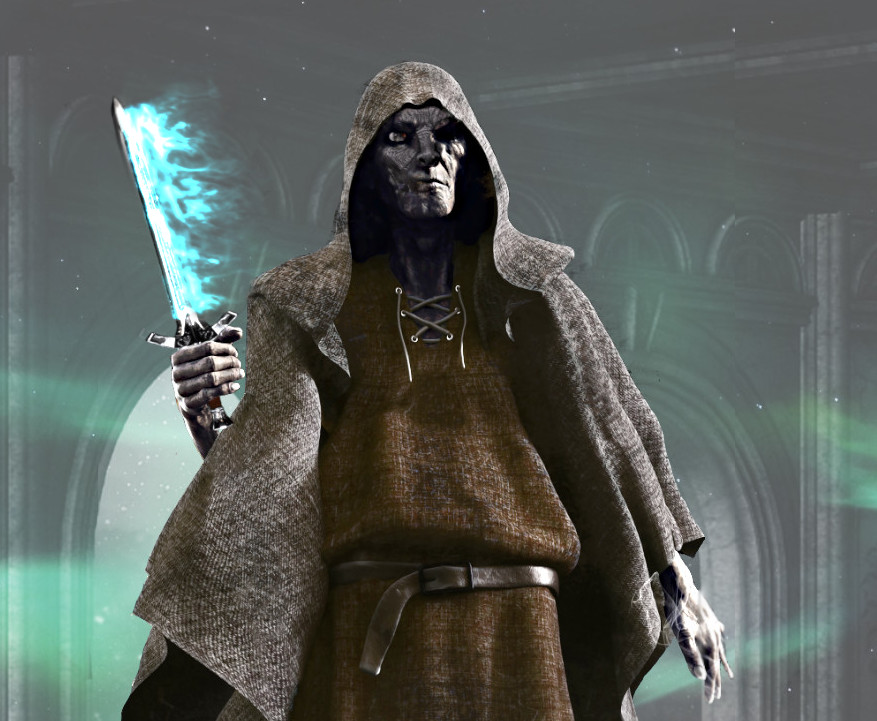
Imperial Viral Mage Beezer Year 10 YI (Year of the Imperium)
What are Virals?
The undead have existed for over a thousand years, shaped by death and misery and clouded with dark magic. Conceived during plague outbreaks, they earned the name Plagueborn or Virals, a term that became a byword for evil among the living. To many, they are harbingers of death and destruction—mysterious, dark creatures to be feared and despised. Yet the truth could not be more different. Well… at least for most of them.
Rasnal Nalrost
There was a time when the name Rasnal Nalrost was whispered in both reverence and dread. Driven by a consuming ambition, sometime around 100 BI—though scholars dispute the exact date—this ancient spectral mage delved into darker magic in pursuit of ever‑greater power. His experiments eventually turned to people, producing horrific results and culminating in his attempt to create an army of the undead in 79 BI.
During this period, he touched the Spectrum of Existence itself, opening a window into other realms. So infatuated had he become with his own power that he sought to steal the magic of the angels. His plans culminated in a catastrophic spell in 79 BI, which resulted in the plagues that would ravage the world for a thousand years, claiming millions of lives and giving rise to the viral undead.
His lover, Astra Dar—a sorceress of immense power, said by some to rival Nalrost and by others to surpass him—attempted to stop him. Nalrost, usurped by Tartaros and bound to two unusual shraeds, had grown estranged from her. Secretly, Astra worked to undermine him, attempting to thwart his spell by obtaining the Aura Crystal, an ancient angelic artefact. She failed, the artefact taken by the twin shraeds. Still, she cast a counter‑spell that disrupted Nalrost’s own, though it cost both her life and her son’s. Nalrost’s spell was turned against him in dramatic fashion, forever changing him.
Even so, the undead were created—just not as he intended. Their unlife aside, they proved to be like everyone else, with hopes, dreams, desires, and ambitions. His dreaded army never materialised. Instead, a new hope for the world emerged: the viral undead.
Despite this, the undead became the subject of persecution as the centuries passed, even though they often proved invaluable allies to the living. Much of this hatred was stoked by dark powers working in the shadows, waiting for the opportune moment to strike.
Appearance
Most virals looked human, and some—without close inspection—might have seemed alive. A rare few could mimic life entirely, concealing their true nature from the living, or breathers, as they called them. The vast majority, however, could not. As they aged, they decayed more rapidly. Those who lived for centuries often lost parts of their bodies as rot and decay took hold. Yet the magic that birthed them sustained them, and such ancient virals found ways to compensate.
Many imperial scholars speculate that the viral undead were meant to survive only a few hundred years, their numbers replenished by recurring plagues. But with Nalrost’s spell having gone awry, nothing is certain, and some virals have persisted for nearly a thousand years or more.
Virals like Threadfin Todder—only twenty‑six years old in 923 YC—experienced some decay but managed it through natron baths and other methods to rid himself of maggots and slow the rot. Younger virals such as Tezcat Licolo, technically in her late teens in 923 YC, appeared much healthier, though she bore a grey‑green tinge to her skin and lifeless hair.
Generally, the older the viral, the more desiccated and decrepit they appeared, unless magic was used to hide it. After the return of the viral horde in mid‑924 YC, the viral mage Beezer bore a caved‑in section of his face. When this damage occurred is unknown.
Aiyana Todralan
Aiyana Todralan was only a few years older than her brother Threadfin. She possessed the rare ability to hide her true nature behind a magical façade. When she revealed her true face, however, the damage always appeared more extensive—likely the price of maintaining that façade since early childhood. There is evidence suggesting that the use of viralic magic accelerates decay in virals.
Threadfin Todder, as with many things, defied this trend. The more he used his magic, the more he changed—but not through decay. His appearance became increasingly draconic, with scaly skin and horns, and if anything, decay troubled him less as time passed. This may have been due to a stronger connection with his Watcher, though nothing is certain.
Aiyana carried her own extraordinary secret. As a child, the mage Beezer reached across time from two hundred years before her birth and formed a connection with her. Whether he knew who he would find is unclear—perhaps it was accidental, though more likely something or someone guided him. With that undead child, he made a pact. During the Purges, he sent the souls of thousands of undead across time to bond with her. Connected to her soul, they guided and guarded her throughout her early existence until the time came for their release.
She sometimes saw them as draconic Watchers in her dreams. On occasion, Aiyana used her gift to mimic life and give temporary form to a soul—Tezcat Licolo, for instance—allowing that soul to appear wherever it wished. In this way, Aiyana sent Tezcat to watch over her brother during his exile.
It is also worth noting that Aiyana could connect with her grandfather’s soul, suggesting she carried not only the souls of those virals lost during the Purges, but every viral in history who had died. A heavy burden indeed.
Types of undead
Virals
Although all undead are technically classified as virals, the term is most commonly used to refer to the more human‑like undead such as Threadfin Todder, Beezer, and Tezcat Licolo. For most of his life, Threadfin was unaware that other virals even existed; since the Purges, his kind had become rare, and those who survived remained hidden from the living.
Ghouls
Designed by Nalrost to spread the plagues so more undead could be born, ghouls eventually vanished from Threadfin’s world, appearing only during rare incidents when their powers were triggered. They were found mostly in the Styx—later known as the Grimstyx. Considered mindless creatures, they bore human‑like faces, claws, and sometimes horns.
They often moved on all fours, though they were capable of walking upright. Ghouls possessed a unique ability to transition between the mortal world and the Styx, where the Grim resided. Anyone wishing to enter or leave that realm could do so by pressing the pressure points behind a ghoul’s eyes, prompting the creature to take them there. This ability may have been deliberately built into them by Nalrost in case his plans went awry—which they invariably did.
Giant Serpents
Threadfin Todder encountered giant snake‑like creatures capable of producing and retracting legs at will while within a memory fragment created by Manic and Mani. Though they have no known formal name, they are generally accepted as viralic in nature—an assertion made by Roper. He also claimed they were among the many experiments of Rasnal Nalrost. Countless such experiments may be lost within innumerable memory fragments. No one knows for certain.
Undead Dragons
While not virals in their own right, certain virals—including Threadfin Todder, and later others—could transform into undead dragons. This ability stemmed directly from the true nature of the magic they wielded.
Vampires
Another of Nalrost’s experiments gone wrong, vampires were created in imitation of vanths, a Rift of the Fallen Ones. They proved too violent and dangerous, and when they turned on their master, Nalrost and the angels worked together to imprison them for all time. Unfortunately, “all time” proved shorter than expected.
Zombies
Zombies did not exist in Threadfin Todder’s era, but they had once existed long ago. Many spectral mages experimented with magic—none more so than Rasnal Nalrost—and some delved into necromancy. Zombies were the result. Eventually they were all destroyed, as the mages found them more trouble than they were worth. It was not until Nalrost’s infamous spell that the true undead were created.
Other Interesting Facts
Virals often ate seafood—usually seaweed, molluscs, or fish. The reason is unknown, though some imperial paytors speculated that something in seafood granted virals additional vitality. The fact that they needed to eat at all was considered unusual; many believed it was more of a craving than a necessity. It is unlikely that one of the undead could starve to death. Whatever the reason, adult virals felt the need to eat far less often than younger ones.
Threadfin Todder, for example, frequently ate guck, a mixture of ground kale and ground fish. Later, after undergoing a physical change due to complications with his magic, he began to crave raw meat—the bloodier the better. As he later admitted, this did little to improve the undead’s reputation among breathers. Apart from vampires, this was not a common trait among his kind.
Reproduction
Generally, the undead are sterile and do not produce offspring. New viral births occurred in living women during plague outbreaks, resulting in extremely difficult pregnancies that always ended in stillbirth. Minutes—or sometimes hours—later, the infant would become animate, and a viral was born. Some who were buried quickly would eventually claw their way out of the ground. There is, however, one known instance of a viral fathering children.
Both Threadfin Todder’s sister and grandfather shared an extremely rare ability: they could imitate life. Threadfin’s grandfather, Olen Quintus, could create life within his own body to the point of having a beating heart and pumping blood. He was known to have taken cuts and bled. Maintaining this illusion likely required constant magical effort.
His viralic face was said to be hideous, and those few who knew his true nature rarely saw it. In the same way he could mimic life within himself, he could mimic it within the womb of his wife. Despite his nature, his children were not born undead—a fact that has baffled scholars ever since it became known. His daughter‑in‑law, Mayala Lyn Todralan, contracted the plague in the borderlands of the Imperium in 895 YC while heavily pregnant with Aiyana, having already borne one daughter, Sarscha, aged seven. She later gave birth to Threadfin two years after Aiyana’s birth, dying in childbirth. Both children were born undead.
Viral Magic
The magic of the undead is a dark power, generally considered viralic in nature and a product of the Darkness, also known as Tartaros. Despite this, many virals used their magic for good—some becoming healers, others, like Threadfin Todder, striving to save the world from annihilation. In the end, the magic itself was never the problem; whether it served good or evil depended entirely on the heart of the wielder. Still, magic could corrupt, but this usually meant the one being corrupted was already weak or walking a darker path.
An Unusual Talent
Most virals possessed unusual magical talents—Tezcat Licolo, for instance, could raise dead things to terrorise breathers. Threadfin, however, saw things in reflections. His own reflection was absent, but he often witnessed strange or horrific events in puddles, metal, or any reflective surface. Over time, he learned to use this gift to his advantage as he grew into a powerful mage. This ability was unique among virals.
He also saw his magic in the form of a dragon, though he had no name for such a creature at the time, as dragons were unheard of. Instead, he called it the Watcher—the creature itself seemingly feeding him this knowledge. He would later realise that Watchers were present in most viral undead. Threadfin often felt as though his magic was trying to devour him—and in truth, it was. It sought freedom, control, and above all else, to kill.
The Purges
The undead were rarely loved by the living. Even so, they managed to coexist for centuries—until 702 YC. That year, the twin soul fragments Antipa Todralan and Rade Wyn set in motion a terrible event. The living were forced to turn on the undead, and war erupted. The undead formed the first clots—groups banding together to survive the onslaught.
The Purges spread across continents, resulting in the disappearance of hundreds of thousands of virals. Many living people were also caught up in the hysteria, denounced as virals and executed.
Though virals were maligned, misunderstood, hated, and feared, their presence in the world was vital as the forces of Tartaros mobilised against existence itself.
Breathers may have built this world, but it is the undead who defend it.